Sunday, August 20, 2006

Spurgeon's Insight to Present Day Matters

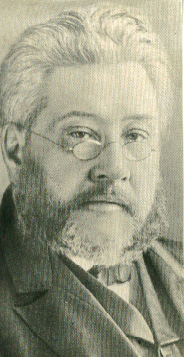
Each week Phil Johnson at the Pyromaniacs blog puts up an excerpt from C.H Spurgeon that speaks with amazing relevance to present day matters. Considering the talk of emergent conversations and even the new perspective I found last weeks post to be very insightful.

The PyroManiacs devote space at the beginning of each week to highlights from The Spurgeon Archive.The following excerpt is from "Progressive Theology," an article appearing in the April 1888 issue of The Sword and the Trowel. The article echoes some of the Spurgeon material we have posted before, where Spurgeon seems to speak directly to the postmodern spirit.In fact, we've pointed out such comments from Spurgeon many times. We think they offer convincing proof that "evangelical postmodernism" is really little more than Victorian-style modernism decked out in tattoos and punk clothing. See especially here and here. (Phil Johnson)

"Do men really believe that there is a gospel for each century? Or a religion for each fifty years? Will there be in heaven saints saved according to a score sorts of gospel? Will these agree together to sing the same song? And what will the song be? Saved on different footings, and believing different doctrines, will they enjoy eternal concord, or will heaven itself be only a new arena for disputation between varieties of faiths?

We shall, on the supposition of an ever-developing theology, owe a great deal to the wisdom of men. God may provide the marble; but it is man who will carve the statue. It will no longer be true that God has hidden these things from the wise and prudent, and revealed them unto babes; but the babes will be lost in hopeless bewilderment, and carnal wisdom will have fine times for glorying.

Scientific men will be the true prophets of our Israel, even though they deny Israel's God; and instead of the Holy Spirit guiding the humble in heart, we shall see the enthronement of "the spirit of the age," whatever that may mean. "The world by wisdom knew not God," so says the apostle of the ages past; but the contrary is to be our experience nowadays.

New editions of the gospel are to be excogitated by the wisdom of men, and we are to follow in the wake of "thoughtful preachers," whose thoughts are not as God's thoughts. Verily this is the deification of man! . . .It is thought to be mere bigotry to protest against the mad spirit which is now loose among us. Pan-indifferentism is rising like the tide; who can hinder it? We are all to be as one, even though we agree in next to nothing. It is a breach of brotherly love to denounce error.

Hail, holy charity! Black is white; and white is black. The false is true; the true is false; the true and the false are one. Let us join hands, and never again mention those barbarous, old-fashioned doctrines about which we are sure to differ. Let the good and sound men for liberty's sake shield their "advanced brethren"; or, at least, gently blame them in a tone which means approval.

After all, there is no difference, except in the point of view from which we look at things: it is all in the eye, or, as the vulgar say, "it is all my eye"! In order to maintain an open union, let us fight as for dear life against any form of sound words, since it might restrain our liberty to deny the doctrines of the Word of God!But what if earnest protests accomplish nothing, because of the invincible resolve of the infatuated to abide in fellowship with the inventors of false doctrine?Well, we shall at least have done our duty. We are not responsible for success. If the plague cannot be stayed, we can at least die in the attempt to remove it.

Every voice that is lifted up against Anythingarianism is at least a little hindrance to its universal prevalence. It may be that in some one instance a true witness is strengthened by our word, or a waverer is kept from falling; and this is no mean reward.It is true that our testimony may be held up to contempt; and may, indeed, in itself be feeble enough to be open to ridicule; but yet the Lord, by the weak things of the world, has overcome the mighty in former times, and he will do so again.

We cannot despair for the church or for the truth, while the Lord lives and reigns; but, assuredly, the conflict to which the faithful are now summoned is not less arduous than that in which the Reformers were engaged. So much of subtlety is mixed up with the whole business, that the sword seems to fall upon a sack of wool, or to miss its mark. However, plain truth will cut its way in the end, and policy will ring its own death-knell.

-CH Spurgeon

Friday, August 18, 2006

Too Good to Throw Away!

What follows is basically a book which Paul Manata has put together on his blog Pressing the Antitheses. I put it up here because he will be closing his blog and scraping everything on it due to time restraints and priorities...I really don't want this to get lost...it's too good to get junked!

The Philosophy of the Christian Religion
Edited by Paul Manata

CHAPTER 1: Arguments For God's Existence
i. If Knowledge Then God: The Epistemological Theistic Arguments of Plantinga and Van Til. - Dr. James Anderson
ii. Two Dozen (Or So) Theistic Arguments. - Dr. Alvin Plantinga
iii. The Argument From Reason. - Dr. Victor Reppert
iv. The Indispensability of Theological Meta-Ethical Foundations for Morality. - Dr. William Lane Craig

CHAPTER 2: The Problem of Evil

i. The Problem of Evil. - Dr. Greg Bahnsen
ii. The Bible on The Problem of Evil: Insights from Romans 3:1-8,21-26; 5:1-5; 8:28-39 -John M. Frame
iii. Evil As Evidence for God -Grek Koukl
iv. Why Calvinists Can't Solve The Problem of Evil. -Dr. Victor Reppert
v. Why Calvinists Can't Solve The Problem of Evil (A Direct Response). -Steve Hays
vi. Why Calvinists Can't Solve The Problem of Evil (An Indirect Response). - Frame, Adams, Piper, Sproul et al
vii. Euthyphro's Dilemma. -Greg Koukl
viii. Euthyphro, Hume, And The Biblical God. -John M. Frame
ix. The Problem of Evil. -Greg Welty

CHAPTER 3: Free Will and Moral Responsibility

i. Free Will And Moral Responsibility. -John M. Frame
ii. Determinism, Chance And Freedom. - John M. Frame
iii. Free Will And Moral Responsibility Are Not Inconsistent. - Dr. Loraine Boettner
iv. On Free Will. - John Calvin
v. Compatibalism, Incompatibalism, Pessimism, Moral Responsibility, Metaphysics and Moral Psychology, and Challenges to Pessimism. - Galen Stawson, Routledge Encyclopedia of Philosophy
vi. Free Will And Responsibility. - Dr. John Byl
vii. Arminianism and the Idol of Free Will. - John Owen

CHAPTER 4: The Attributes of God
[A] Time And Eternity:

i. Is 'Timeless' Divine Action Coherent. - Dr. Michael Sudduth
ii. Eternity. - Dr. Paul Helm
iii. Is It Coherent to suppose that there Exists an Omniscient Timeless Being? - Dr. Michael Sudduth
iv. God in Time. -John M. Frame

[B] Omniscience and Human Freedom:

i. Foreknowledge and Human Freedom. - John M. Frame
ii. God's Foreknowledge and Free Will. - Stephen Charnock
iii. Does Divine Timelessness Resolve the Problem of Foreknowledge and Human Freedom. - Dr. Michael Sudduth
iv. Cross Examination: Foreordination and Free Will. - Dr. Greg Bahnsen

[C] Omnipotence:

i. Omnipotence. -Dr. Joshua Hoffman and Dr. Gary Rosencrantz
ii. Omnipotence. -Dr. Edward Wierenga
iii. Omnipotence. -Geerhardus Vos
iv. The Lord of Power. -John M. Frame
v. Divine Omnipotence. -Dr. Sam Storms

CHAPTER 5: Miracles
i. The Problem of Miracles. -Dr. Greg Bahnsen
ii. Miracles: A Test Case . -Dr. Vern Poythress
iii. Counterfeit Miracles. -B. B. Warfield

CHAPTER 6: Faith and Reason
i. Ready to Reason. -Dr. Greg Bahnsen
ii. The Problem of Faith. -Dr. Greg Bahnsen
iii. Natural Theology and the Rationality of Religious Belief. -Dr. Michael Sudduth
iv. Theism, Atheism, and Rationality. -Dr. Alvin Plantinga
v. How To Believe in God in The 2000s. -John M. Frame
vi. Faith and Reason. -Dr. Michael Polanyi
vii. Faith. -B. B. Warfield

CHAPTER 7: Religious Language
i. The Problem of Religious Language. -Dr. Greg Bahnsen
ii. IS HUMAN LANGUAGE ADEQUATE TO TALK ABOUT GOD? A CRITIQUE OF VERIFICATIONISM AND THEOLOGICAL PESSIMISM. -Dr. Michael Sudduth

CHAPTER 8: Christian Theism and Abstracta
i. An Examination of Theistic Conceptual Realism As An Alternative To Theistic Activism. -Greg Welty
ii. Theism and Mathematical Realism. -Dr. John Byl
iii. Logic. -John M. Frame
iv. Reforming Ontology and Logic in the Light of the Trinity: An Application of Van Til's Idea of Analogy . -Dr. Vern Poythress
v. Creation and Mathematics; Or, What Does God Have To Do With Numbers. -Dr. Vern Poythress

CHAPTER 9: Christianity and Science
i. Why Scientists Must Believe in God: Divine Attributes of Scientific Law. -Dr. Vern Poythress
ii. Is Intelligent Design Science?. -John M. Frame
iii. Scripture and Geologists. -Dr. John Byl
iv. When Faith and Reason Clash: Evolution and the Bible. -Dr. Alvin Plantinga
v. An Evolutionary Argument Against Naturalism. -Dr. Alvin Plantinga
vi. Naturalism Defeated. -Dr. Alvin Plantinga
vii. Revelation, Speculation, and Science. -Dr. Greg Bahnsen
viii. Science, Subjectivity, and Scripture. -Dr. Greg Bahnsen

CHAPTER 10: Christian Ethics
i. What Is Theonomy?. -Dr. Greg Bahnsen
ii. The Authority of God's Law. -Dr. Greg Bahnsen
iii. Cross Examination: A Biblical Standard For Civil Law. -Dr. Greg Bahnsen
iv. Penultimate Thoughts on Theonomy. -John M. Frame
v. Some Thoughts on Theonomy. -G.I. Williamson
vi.Christian Ethics: Basic Principles. -John M. Frame

Wednesday, August 16, 2006

The Modern Assault on Justification by Faith Alone (Sola Fide)

Not sola fide too!In addition to sola scriptura probably the doctrine most characteristic of Protestantism is justification by faith alone. This was what really brought about the break from Rome. Rome has held to a synergistic view of justification faith+works, so the idea that we are saved by faith wasn't repulsive it was the alone (That really is Rome's beef with all the five solas). So were the reformers right in adding the "alone" faith?

Scripture certainly seems to be in favor of a faith based justification as we see in numerous places:

"And to the one who does not work but trusts him who justifies the ungodly, his faith is counted as righteousness," (Rom 4:5)

"For in it the righteousness of God is revealed from faith for faith, as it is written, "The righteous shall live by faith." (Rom 1:17)

"For we hold that one is justified by faith apart from works of the law." (Rom 3:28)

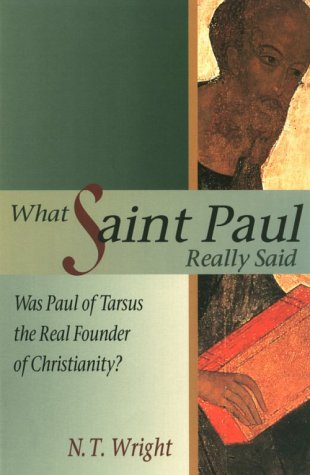
These are but a few examples of scriptures that led the Reformers to abandon Rome's system of justification, scripture seems to teach that man is justified by faith apart from works (or alone). It has been held by orthodox Protestantism that by faith in Christ we actually receive the righteousness of Christ (His perfect life lived in our place) while on the cross Christ takes our guilt/sin upon Himself, a double exchange. It is this part of justification that is under attack today, the doctrine of the imputation of Christ's righteousness. It is this part of justification by faith that has been challenged in recent years. The challenge is spearheaded by protestant who argue for a "New Perspective on Paul". The most well known New Perspective voice is Anglican theologian N.T Wright.

New Perspective in a Nutshell:

I am trying to be as succinct as possible on the NP issue to make this into a single post. Phil Johnson in a lecture on the NP notes five distinctives of Wright's NP of Paul:

1) We have misunderstood 1st century Judaism.
2) We have misinterpreted Paul's argument with the Judaizers.
3) We have mistaken what Paul meant by "The works of the law."
4) We have misconstrued Paul's doctrine of justification by faith.
5) We have misread what Paul wrote when he spoke of "The righteousness of God."

To clarify this a little more, by saying we have misunderstood 1st century Judaism the NP means that 1st century Judaism really wasn't a works based righteousness system as is often viewed. Rather 1st century Jews had a strong emphasis on divine grace. We misinterpreted Paul's arguments with the Judaizers in the sense that Paul wasn't arguing how one becomes a Christian, the problem he addresses is should X pagan converts be circumcised. "The Works of the law" in Wright's understanding Paul did not mean the moral requirements of the law, rather he meant the ceremonial such as circumcision, feasts etc (What about Romans 7 where Pauls specifically talks about covetousness?). Fourthly, a big one, the NP states that in Paul's mind justification had nothing to do with someone's rightstanding with God, as it was about how we come together as a covenant community. The "righteousness of God" is not an asset that can be imputed, rather it is merely God's covenant faithfulness.

Thus, if Wright is right evangelicals have the gospel all wrong, he says:
"The gospel is not one gets saved in an individual and historical sense."

Justification therefore is based on covenantal unity, God's righteousness to the believer is His faithfulness, this seems to make justification a process, rather than an event which Wright clearly rejects. There is no imputation of righteousness to the believer in the NP, righteousness is not something which can properly be imputed (This of course raises questions about what did Christ's cross actually do? Wright is fairly silent on this although he has endorsed a book which argues that the imputation of our sins upon Christ to appease the wrath of God, is Divine child abuse). It is this one area of the NP that I want to address, if the stuff above has whet your interest to understand this NP more (and arguments against its scholarship) check out this page at Monergism.

How the NP and Wright get Justification Wrong:

I am only going to deal with the erroneous views of justification and imputation here, which in part are:
1) Justification in Paul's mind is not an event so much as a process, 2) Justification in Paul's mind is not having to deal with a sinners standing with God so much as a community. 3) Justification does not involve a transfer of "the righteousness of God" to sinners (imputation).

1) The NP gets justification wrong by describing it in a non-historic fashion, justification is not something that has happened to believers as it is happening. Again this is the New Perspective on Paul, so how does Paul describe justification? I think in two ways, a) As a past event and b) as a future pronouncement at the final judgment.

"Therefore, since we have been justified by faith, we have peace with God through our Lord Jesus Christ." (Rom 5:1)

"Since, therefore, we have now been justified by his blood, much more shall we be saved by him from the wrath of God." (Rom 5:9)

Justification is described by Paul in a past tense, it clearly is an event that has taken place with believers which also has future ramifications. These two verses are also a serious problem to the NP's view on 2).

2) Justification int the NP view is not so much dealing with the sinners standing with God as it does talk about the sinners entrance into the community of the Church and acting as a community member should. Thus, justification is a process not an event. This "process" sort of think looses its footing when we see justification described by Paul in terms of "having been", continuous processes can't be described in a perfect past tense. Anyway, problems from Paul with point #2:

"For by works of the law no human being will be justified in his sight, since through the law comes knowledge of sin." (Rom 3:20)

"Therefore, since we have been justified by faith, we have peace with God through our Lord Jesus Christ." (Rom 5:1)

I cite Romans 3:20 and 5:1 to show that justification in Paul's mind is vertical not horizontal as Wright asserts, it has everything to do with man's rightstanding with God. Man's sinfulness and guilt and God's wrath and justice, are on a collision course so to speak. Yet if historic prostestantism is right Christ comes and credits His righteousness to those who believe in Him, thus God is just in letting the guilty go free for they deserve nothing less, because in Christ they are not guilty. This brings us to 3.

3) Another major point of departure of the NP from historic Protestantism is a denial of the imputation of Christ's righteousness, I will focus on this more heavily than the above two. Does the bible teach that Christ's righteousness is imputed to those who have faith in Him? Wright asserts that the only passage that might seem to teach this is 1 Cor 1:30. I agree that 1 Cor 1:30 certainly seems to teach imputation but that is not the only nor the most clear passage on this issue. There are several passages that deal with this matter:

"For God has done what the law, weakened by the flesh, could not do. By sending his own Son in the likeness of sinful flesh and for sin, he condemned sin in the flesh, in order that the righteous requirement of the law might be fulfilled in us, who walk not according to the flesh but according to the Spirit." (Rom 8:3-4)

Here it seems apparent that based upon Christ's finished work the law is fulfilled in some people (those who have faith in Christ).

"It will be counted to us who believe in him who raised from the dead Jesus our Lord,
who was delivered up for our trespasses and raised for our justification."
(Rom 4:24-25)

Christ was delivered for our trespasses and raised for our justification and it is counted (imputed) to us by faith.

"He is the source of your life in Christ Jesus, whom God made our wisdom and our righteousness and sanctification and redemption." (1 Cor 1:30)

"For our sake he made him to be sin who knew no sin, so that in him we might become the righteousness of God." (1 Cor 5:21)

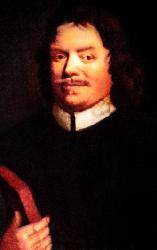
With the last two verses I think it is clear that Christ was delivered to take our sin and impart His righteousness to us. You would have to do some serious exegetical tricks to get around the clear cut meaning of 2 Cor 5:21. Before I end the post though I don't want this to be a mere defense of the right answer, we need to treasure the doctrine of imputation. A good way to do that is to see how this doctrine radically transforms lives. This doctrine is a tremendous freedom giver to the guilty conscience. John Bunyan comes to my mind, Bunyan struggled with a stark uncertainty of his standing with God until the truth of Christ's imputed righteousness broke in upon his wavering soul, Bunyan writes:

"One day as I was passing into the field . . . this sentence fell upon my soul.Mr.John Bunyan Thy righteousness is in heaven. And methought, withal, I saw with the eyes of my soul Jesus Christ at God's right hand; there, I say, was my righteousness; so that wherever I was, or whatever I was doing, God could not say of me, he wants [lacks] my righteousness, for that was just before [in front of] him. I also saw, moreover, that it was not my good frame of heart that made my righteousness better, nor yet my bad frame that made my righteousness worse, for my righteousness was Jesus Christ himself, "The same yesterday, today and, and forever" (Hebrews 13:8).

Now did my chains fall off my legs indeed. I was loosed from my afflictions and irons; my temptations also fled away; so that from that time those dreadful scriptures of God left off to trouble me; now went I also home rejoicing for the grace and love of God." (John Bunyan, Grace Abounding to the Chief of Sinners, [Hertfordshire: Evangelical Press, 1978, orig. 1666], pp. 90-91)

The truth that broke Bunyan's bonds of despair as he saw his guilt before a holy God was the truth of Christ's imputed righteousness. The imputed righteousness doctrine teaches that Christ's righteousness is our righteousness by faith. Thus, our consciences can rest for the guilt that we so often see is now covered in the righteousness of Christ given (imputed) to us. We by faith alone in Christ are holy and without blame before God on account of Christ's righteousness in our behalf, this is what it means to be justified by faith.

Friday, August 11, 2006

Is Sola Scriptura A Protestant Concoction?

Just Luther's dogma?A good friend of mine has recently been having some theological discussions with some Roman Catholics. These aren't your run of the mill Catholics, these seem to care a good deal about doctrine (oxymoron?). One of the points that these Catholics pressed was that in all reality the Bible is not the only authority on which we are to base our doctrine. I frankly have never heard this pushed so blatantly, generally I have merely heard quibbles about how we cannot interpret the bible on our own, so therefore we need the saints and popes (Catholic Church's tradition) to interpret for us. Thus, this is not an outright denial of sola scriptura but a kind of sidestep. However, these guys are a bit more militant and there argument against sola scriptura would logically go as follows:

(1) Protestants hold to X (The doctrine that the scriptures alone are to be authoritative.)
(2) X is not found in the scriptures.
.:(3) Therefore X is self refuting.

This is the core of the challenge against sola scriptura, namely that it takes an extra-biblical dogma to establish (1), which says only the bible gives authority to doctrine. The above argument is valid. Yet, its presuppositions may not be sound. So if sola scriptura is true, the place to challenge this logical argument is point (2). From what I have been looking at on the net this seems to be the starting point devout Catholics make to challenge sola scriptura, to read an example check this out.

Does the Bible Teach Sola Scriptura?

A.A. Hodge lays out a good outline of a response that I will work from to answer these challenges as he writes:
"1st. The Scriptures always speak in the name of God, and command faith and obedience.
2nd. Christ and his apostles always refer to the written Scriptures, then existing, as authority, and to no other rule of faith whatsoever.--Luke 16:29; 10:26; John 5:39; Rom. 4:3;2 Tim. 3:15.
3rd. The Bereans are commended for bringing all questions, even apostolic teaching, to this test.--Acts 17:11; see also Isa. 8:16.
4th. Christ rebukes the Pharisees for adding to and perverting the Scriptures.--Matt. 15:7-9; Mark 7:5-8; see also Rev. 22:18, 19, and Deut. 4:2; 12:32; Josh. 1:7."

*(I think progressively with each point it Rome's error becomes more flagrent)*

1st) The scripture clearly displays God alone as having the right to command men. A case and point testimony of failure to conform to this is found in 1 Kings 13, where a prophet is given specific instructions on how he is to travel to deliver his message (He is specifically commanded to take up no lodging v.9) However, another prophet catches wind that this man is of God and begins to persuade this man to lodge with him even saying to him that God spoke to him that He (God) basically changed His mind and it was now ok to take up lodging. Upon finally accepting the invitation the word of the Lord comes to the deceptive prophet, which condemns the 1st for yielding to the invitations. Later the first prophet is killed by a lion on the road for his disobedience to the word of the Lord.

The point I am driving at is that God expects His word, and His commands to be put above the counsel of men. The entire bible is really a "thus says the Lord" book therefore it is to be held above men's ideas and even interpretations which may err.

2nd) Christ and the apostles leaned upon the written word to support their teachings, therefore to do other than they is not only unsafe but also unwise. It is amazing to note how often Christ uses the phrase "As it is written..." Christ, who really is the author of all scripture, leaned upon the authority of His own written word to give support to His teachings. The scriptures are the foundation of true hope giving teaching:

"For whatever was written in former days was written for our instruction, that through endurance and through the encouragement of the Scriptures we might have hope." (Rom 15:4)

To the scriptures do Christ and the apostles point not only for support of their own teachings but, also for the believer’s instruction (doctrine) and hope.

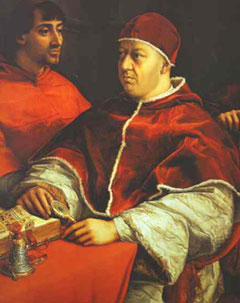
3rd) It is of great note that unlike the Catholic churches dogma's which are viewed as the final authority and unquestionable, Paul basically says to the Bereans: "Good job, you didn't just take my word for it when I presented doctrine to you but you searched the scriptures." (Acts 17:11) Thus, Paul in Are Popes above reproof from scripture?commending the Bereans for this act is really supporting sola scriptura (though he did not give it that name), for if a teaching does not line up with scripture it is not to be received. If even the apostle's teaching was to be put to the scripture test how much more that of Popes and councils? Also, Paul writes to Timothy about what scripture is and how scripture is to be used:
"All Scripture is breathed out by God and profitable for doctrine, for reproof, for correction, and for training in righteousness, that the man of God may be competent, equipped for every good work.” (2 Tim 3:16-17)

If we are going to have right doctrine, and reproof, correct, and train in righteousness, if we are going to do any of these things which Paul mentions here it is to be based upon scripture, scripture is to be our guide. I think the only way a denier of sola scriptura can avoid the clear point of 2 Tim 3:16 is to focus on "profitable". Also, scripture is for the "man of God" not some intellectual elite, the scriptures are to equip every Christian.

4th) Hodge lastly addresses adding to scripture which is forbidden in scripture. Christ says:

"You hypocrites! Well did Isaiah prophesy of you, when he said: "
'This people honors me with their lips, but their heart is far from me;
in vain do they worship me, teaching as doctrines the commandments of men.'" (Mat 15:7-9) also "You leave the commandment of God and hold to the tradition of men." (Mark 7:8)

Here we see a charge Christ brings against the Pharisees (One based upon scripture!) that they are adding to the word the commandments of men. Now almost exactly like the Pharisees Rome would say we are not "adding to" scripture, but rather interpreting for the common man. But that is really one and the same. The Pharisees (Like Rome) also did not add texts to the bible they merely interpreted the bible for the people, and taught that interpretation. Christ calls this teaching the commandments of men, and though the bible itself was not altered, the "interpretations" of men have come to be on par with the word. It seems like the passage in Mark really flies right in the face of the Roman view of "Tradition" as some sort of authority to how we form doctrine. Christ clearly seems to be saying: "Not tradition, but the scriptures", and "Not commandments of men, but the scriptures."

Sadly, it seems that the Catholic church clearly does hold tradition on equal level as the scripture, if not even higher. It doesn't take much scholarship to realize that something is amiss in Roman theology when we look at scriptures like the ones noted above. Now it also must be noted that the "tradition" Christ refers to is specifically that which is not found in scripture (or authoritative via inspiration). We know this because Paul states:

"Now we command you, brothers, in the name of our Lord Jesus Christ, that you keep away from any brother who is walking in idleness and not in accord with the tradition that you received from us." (2 Thess 3:6)

Therefore, there is a tradition handed down by the apostles that we are to stick to. How do we know this "tradition" Paul taught? Scriptures. To contrast:

"See to it that no one takes you captive by philosophy and empty deceit, according to human tradition, according to the elemental spirits of the world, and not according to Christ." (Col 2:8)

Therefore, there is the distinction (so to avoid any Roman slipperiness with the word "tradition") between traditions of men (which are extra biblical) and the traditions of the apostles which is found in the bible alone.
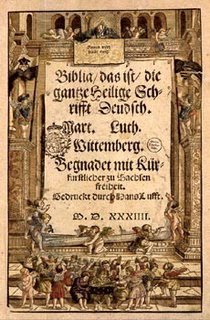
Luther's Bible Translation
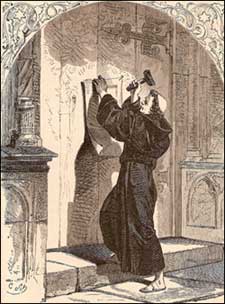
To summarize, it is true that the phrase "Scripture alone is the only authority which the Church is to live by" is not in the bible. However, the practice of sola scriptura is, its truth is taken for granted. This has been seen through Paul's commending the Bereans for searching the scriptures to test Paul's doctrine (Acts 17:11), citations of scripture to support doctrines taught by both Christ and His apostles, Christ's rejections of the traditions of men in place of scripture (Matt 15:7-9). Lastly, and ultimately I think, Christians are exhorted by Paul to "guard the good deposit." (1 Tim 6:20. 2 Tim 1:14) The deposit is no doubt the teachings of the apostles given to the church as a rule, this is of course found in the NT. The deposit does not refer to Pope's rulings or councils but to the teachings of Christ and His Apostle's (at least if we are to read in context), in context this is the only thing the deposit can possibly be.

That being said, I think like Luther that it is neither safe nor wise to base our doctrine and theology on the traditions of men and self-proclaimed "apostolic" successors. I want to stick with the deposit, the sure word of God, rather than the ideas of men.

Saturday, August 05, 2006

Unemployment And The Sovereignty of God

.
Gimmie a Dolla I'm Thirsty!Well as of 10:15 last night (45 minutes before quitting time) I was officially laid off of work. I worked at this place for about a year it was a decent job pulling in $10.50 an hour ($15.75 OT). It is so odd I know I am supposed to get all worried especially in light of the fact that we blew most of our savings on a car Thursday. However, I know that this is Providence and God really has brought this about. I actually am very excited to get in my theology studies that I have been slacking off on, hopefully for a while this will be in the void the work would fill. Anyway I haven't picked up C.H. Spurgeon's "Morning and Evening" devotional for months yet this morning I thought well in light of my unemployment I should really kick of redeeming the time with hearty devotion. Here is what August 5th's "Morning and Evening" reads:

"We know that all things work together for good to them that love God."
- (Rom 8:28)


Upon some points a believer is absolutely sure. He knows, for instance, that God sits in the stern-sheets of the vessel when it rocks most. He believes that an invisible hand is always on the worlds tiller, and that wherever providence may drift, Jehovah steers it. That re-assuring knowledge prepares him for everything.

He looks over the raging waters and sees the spirit of Jesus treading the billows, and he hears a voice saying, It is I, be not afraid. He knows too that God is always wise, and, knowing this, he is confident that there can be no accidents, no mistakes; that nothing can occur which ought not to arise. He can say, "If I should lose all I have, it is better that I should lose than have, if God so wills: the worst calamity is the wisest and the kindest thing that could befall to me if God ordains it." We know that all things work together for good to them that love God.

The Christian does not merely hold this as a theory, but he knows it as a matter ofA breath of God-centered air fact. Everything has worked for good as yet; the poisonous drugs mixed in fit proportions have worked the cure; the sharp cuts of the lancet have cleansed out the proud flesh and facilitated the healing. Every event as yet has worked out the most divinely blessed results; and so, believing that God rules all, that he governs wisely, that he brings good out of evil, the believer's heart is assured, and he is enabled calmly to meet each trial as it comes.

The believer can in the spirit of true resignation pray, "Send me what thou wilt, my God, so long as it comes from thee; never came there an ill portion from thy table to any of thy children."

Say not my soul, "From whence can God relieve my care?"
Remember that Omnipotence has servants everywhere.
His method is sublime, his heart profoundly kind,
God never is before his time, and never is behind."

(End Spurgeon)

Talk about Providence! God is really soveriegn, and all the storms that my beset His saints are really blessing in disguise. It really is good that I got laid off of work. Spurgeon knew from experience the truths which he preached. He suffered from the gout in his feet (thus the cane) as well as other health issues. Probably hardest of all would be the intense criticisms (often very ugly) which Spurgeon recieved from "evangelicals". William Cowper has a hymn that says of God's Providence "The bud may have a bitter taste but sweet will be the flower". It is true, God ordains our trials and though we may not see (even in this life) they are for our good. I don't know what I would do without this sort of a vision of God, that God is all controlling even over the hardships. When things are well there is money in the bank and the car breaks people pay when there is no money in the bank and the car breaks people pray. So one obvious benefit of hard times is to wean us from resting our hope in the things of the world and forcing us to rely upon He alone who is reliable, Christ.

Things will be all right, I know this, but do keep my family and I in prayer, I covet your prayers. I know things will be fine no matter how dark the trial because God promised to work all things (that includes trials) for the good of those who hope in Him alone.

"Though the fig tree should not blossom, nor fruit be on the vines, the produce of the olive fail and the fields yield no food, the flock be cut off from the fold and there be no herd in the stalls, yet I will rejoice in the LORD; I will take joy in the God of my salvation." (Hab 3:17-18)

Thursday, August 03, 2006

What are some effects of postmodernism

John Piper gives an excellent description of the effects of postmodernism in how we view "spirituality". I am particulary interested in as Piper/Wells describe how "spirituality" has a become privatized journey (David Wells' language) because of the strong values of autonomy and rejection of revelatory truth in out day. Man I really want to go to this conferance!

Saturday, July 29, 2006

On Church Unity (Part II)

The Noble C.H. Spurgeon
In the last post on Christian unity we saw the arguments for outward unity in churches had some major problems with it. Some of which were that it would eventually mean that true Christians would for "unity's" sake would have to endure heretics to be in their midst preaching error. I argued that in the biblical sense the unity spoken of means essentially that the body of Christ would both weep with those who weep and rejoice with those who rejoice within the body 1 Cor 12:25-27 (this means bearing burdens for people we may not ever meet Rom 15:26) . This sort of unity transcends location, ethnic cultures, race, age, buildings, wealth, etc. Also, in light of scripture there are to be divisions made, the true church is to divide itself from those who teach error (Titus 3:10). Concerning true doctrine (the good deposit) we are given a call by Jude to contend for the faith saying:

"Beloved, although I was very eager to write to you about our common salvation, I found it necessary to write appealing to you to contend for the faith that was once for all delivered to the saints. For certain people have crept in unnoticed who long ago were designated for this condemnation, ungodly people, who pervert the grace of our God into sensuality and deny our only Master and Lord, Jesus Christ. " (Jude 3-4)

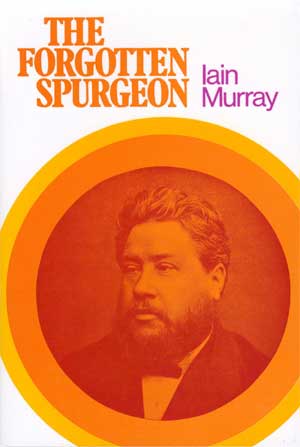
Out of all this I argued that biblically there are good divisions believers are called to make. Reading Iain Murray's book "The Forgotten Spurgeon" continues to validate this view of separation. Spurgeon in his day was in the midst of several controversies, and knew very well what it was to divide over truth. Yet divide we must, for unless lines are drawn in the sand the deposit will be continually chipped away at until there is nothing of it left. On divisions Spurgeon writes:

"I glory in that which at the present day is so much spoken against sectarianism I find it applied to all sorts of Christians; no matter what views he holds, if he be a man in earnest, he is sectarian at once. Success to sectarianism; let it live and flourish. When that is done with [sectarianism] farewell to the power of godliness. When we cease, each of us, to maintain our own views of truth, and maintain those views firmly and strenuously, then truth shall fly out of the land, and error alone shall reign."

Spurgeon is saying that unless the truth is so precious to us that we are willing to divide over it, the truth will eventually be eroded by error. Thus, Spurgeon says basically Hooray for divisions! Hip Hip HOORAY for denominations! For the fact that denominations have formed is because He's Outta Control!men loved the truth enough to divide. I think I agree. I have a greater deal of respect for Christians who I disagree with over issues like Calvinism, WHO WILL disagree with me, rather than those who pacifistically mumble "Lets not get into controversial issues." The latter is NOT the spirit of Bunyan's Mr. Valiant for truth, for EVERY truth of scripture is in its nature controversial. So praise God for men with spines who broke away from the PCUSA (which now ordains lesbian pastors) to form the OPC and PCA denominations. Praise God for men of controversy!

For the day the church decides to stop guarding the deposit is the day error will reign. Error thrives in the anti-controversial environment, it is the very nourishment which it needs. All the enemies of the gospel need is for the saints to become gutless mealy mouths who will not raise the sword of the word to defend the gospel against its foes, because after all many foes wear the "Christian" uniform, and to contend with them would be divisive. For error to infiltrate the church requires men who love not the truth enough to fight for it. Thus, the opposite is true, as Spurgeon writes:

"As to a breach of unity, nothing has ever more largely promoted the union of the true than the break with the false."

Nothing promotes unity within the church greater than putting fences around the deposit, thus keeping error out. We must no overlook the fact that by putting fences around the deposit we may find that this will result in a breaking away from men who are at least brothers in name. However, this is for the health of the flock, fences of doctrinal statements are parallel to boundaries of where the flock may graze, they mark the land Immanuel has given His sheep to feed on, to go outside the fences is not safe, and good shepherds will put up fences for the sheep's sake.

Now we think it an easy judgment call to break away from Rome, or men like Joseph Smith who are clearly in error. Yet it becomes difficult for us to bear when those whom we are at least outwardly dividing from bear the name of evangelical, profess faith in Christ, and hope in His coming are we to have divisions among these ranks also? Are we to divide over matter of baptism, or predestination? As a Calvinist I can recall when I too was thoroughly Arminian in my thinking of election (though I probably wouldn't know what Arminian meant), yet I know that I was saved and washed in Christ though in error theologically.

So this gets somewhat difficult, yet I think the same principal stands that Calvinists and Arminians alike need to bear burdens, care for the sick, lift up the down trodden rejoice with those who rejoice whether Calvinist or Arminian. Likewise we can say of baptism, different views of baptism paedo or confessional are not the grounds for entrance into the body. However, these are biblical issues and it is impossible to have a church that is firm in truth that whole heartily supports both infant and believers baptism, likewise with predestination. Thus, the most reasonable thing to do is have different buildings, because these issues DO matter. To say that Good Bookthese issues do not matter and should be swept under the rug to achieve a unity is to say that something the bible makes a stance on does not matter. There is no doctrine of scripture that is unimportant, therefore there is no doctrine of scripture not worth fighting for. Spurgeon on this matter:

"If you say that any one part of the truth is unimportant, you do as good as say - to that extent the Holy Spirit has come upon an unimportant or valueless mission. You perceive it is declared that he is to teach us "all things"; but if some of these "all things" are really of such minor importance, and so quite non-essential, then surely it is not worth while disturbing our minds with them. And so to that degree, at any rate, we accuse the Holy Spirit of having come to do what is not necessary to be done; and I trust that our minds recoil with holy repulsion from such a half-blasphemy as that..."

Out of all this I am mainly trying to say that denominationalism is a good thing, and all to often it seems that those furiously who object to it are not thinking theologically. I recall receiving from a speaker in my early years as a Christian a sort of rearranged "I have a Dream" speech with about 10 dreams. 1 of which was that the denominational barriers would be torn down another of which was that all Christians accept the teaching of spiritual gifts for today! Even at the time I thought this was problematic, there are Christians who don't think that way and you are lamenting the denominational divisions so how do you solve the problem...They all need to think like me!

Which brings me to my final point out of much of the talk today about church unity a new ecumenicalism is emerging. Like the old it overlooks doctrinal truth as superflous, the main mission of the church is to feed the poor, clothe the naked, and teach the ignorant (What about that great commission thing Jesus was going on about?). Just like old liberal ecumenicalism, there is nothing new under the sun, same heresies just keep getting recycled. You can't have the great commission and ecumenical stances on doctrine, because to fulfill the great commission requires defining the message which we are to bring into all the world. When we define the message, if it is biblically defined we will find that many "evangelicals" simply don't agree. For instance that Christ is the only way. So if we are to fulfill Christ's call this will require a guarding of the deposit which will practically cause divisions.